



9am, 1991. The future I had planned was gone.
I can still feel the paper in my hands.
That little slip, folded once, handed over in a school hall. The letters on it were the wrong letters.
Not catastrophically wrong. Just wrong enough. Wrong enough to take L.S.E. off the table and put my whole plan in the bin before the day had properly begun.
I had no idea what would unfurl from that morning. All I knew was that the route I had carefully mapped out had disappeared.
Life was pretty tough at the time. There was a lot going on, and I was very much on my own with it. Big decisions to make, nobody to make them with.
But I still had one certainty.
Get the degree. Get the job. Build the life.
That was the bargain.
As the first in my family to try for a degree, I was not about to walk away from it. So I swallowed my pride and embraced the hell that was clearing.
If you have only ever known clearing as a website, let me paint it for you.
It was a landline. A busy tone. A list in a newspaper and a pen. It was hours of waiting and confusion, ringing back and being told to ring back again.
I could not move away from London for a number of reasons, which narrowed the pool to something close to a puddle.
Somehow, I found another route.
I had no idea where it would take me. But I believed there would be a job at the end of it and a chance to build something from there.
The 18-year-olds collecting their results today are being asked to make the same enormous decisions without anything like that certainty.
Is university worth the debt? Will there be a job? Will they learn anything relevant, or will the world of work change again before they graduate?
That is a hell of a lot to hold at eighteen.
And the noise surrounding them is deafening.
The Noise
Start with the numbers, because they are worse than the vibes.
More than a million young people in the UK are NEETS - not in work, education or training. Graduate hiring is forecast to fall again this year. University costs more than ever. You will be in debt. There may be no job at the end of it. AI has eaten the entry level. Pick a headline, any headline.
Then, because the universe has a sense of humour, they swipe past all of that into their social media feeds and an endless carousel of bros and hot gals working one day a week from a balcony in Dubai. Apparently the real move is drop-shipping. Or crypto. Or influencing. Or selling a course on personal branding. Or setting up as an AI consultant.
Those last two sting. I am aware.
So let me be clear. I am not selling anyone an exit. I did the thirty years. I work harder now than I did inside the job. I do not promise new fortunes, and you should not believe me if I did.
What I care about is the boring bit: what this technology actually does on a Wednesday afternoon, when nobody is filming.
These young people have done two years of graft. EPQs. Mocks in January. Tube strikes and lifts across town. Then they stand in a school hall and get asked, before breakfast: is any of this worth it?
Is it worth the debt? Will there be a job? Will I learn anything relevant, or is it three years of fun and a very large bar tab?
That is a hell of a lot to hold at eighteen.
Everything is taking longer, too. Longer to buy a house. Longer to feel settled. Longer to reach the bit that used to be called security.
The runway got extended and nobody told them.
What I saw on my recent university campus tour
I have spent a lot of the last year traipsing around universities with my twins. Sticky lecture theatres, terrible coffee, brilliant buildings.
We should be genuinely proud of what we have in this country. The institutions, the campuses, the depth of teaching and research. It is one of the world’s great education systems and we often talk about it like a broken boiler.
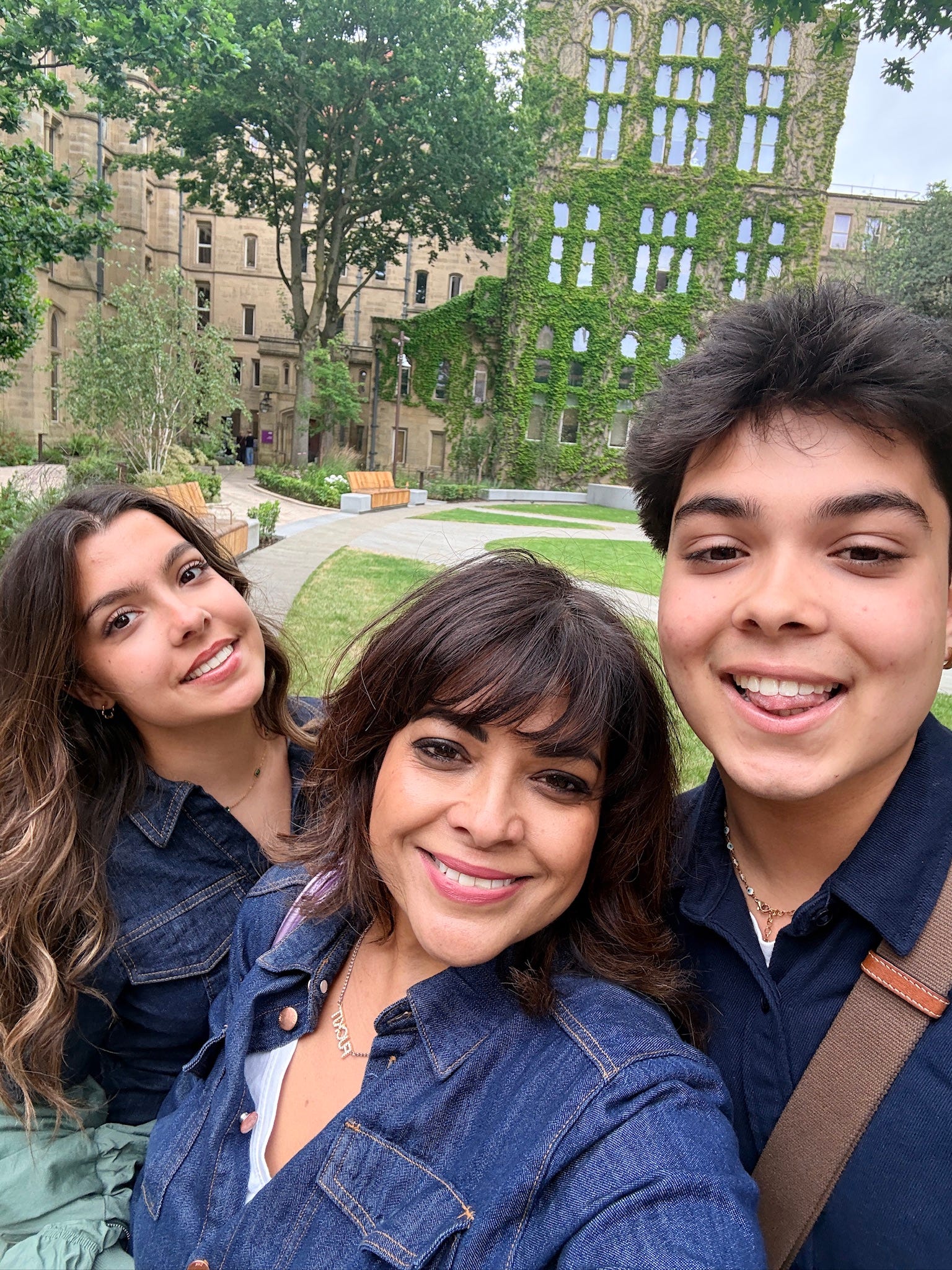
But every parent in every room was asking some version of the same question.
What is the employability on this course? What are the graduate outcomes? Is this worth it?
And then there was the lecturer who opened his talk with, and I promise I am not making this up:
“Well, it doesn’t really matter what I tell you, because there aren’t any jobs anyway.”
Bold way to sell further education to a room of teenagers and their already twitching parents.
I sat there thinking: it does not matter what the graduate outcome has been. None of us knows exactly what it will be.
What university is for
I am not waving a flag for either side. University or not university is not the interesting question, and anyone selling you a perfect answer is probably selling you something else as well.
A degree is not only a transaction for a job. Those years can also give a young person freedom, independence, challenge, friendship and the chance to work out who they are away from everyone who has always known them.
That matters.
But university is not the only place to build a life or learn how to live one. The same growth can happen in a job, an apprenticeship, a community, a business or behind a counter at McDonald’s, which is where I started.
The question is not simply whether university is worth it.
It is whether we are creating enough places for young people to learn, contribute, make mistakes and become useful.
The bit aimed at us
My real argument today is with employers.
We are quietly removing the bottom layer of our businesses, the layer where young people used to be trained, and calling it efficiency.
Where do we think future talent comes from? Where is the pipeline?
You cannot delete the first rung of the ladder and then act surprised when nobody can climb.
For every junior role we remove, what are we reinvesting? Anything? Or are we banking the saving and hoping the problem belongs to somebody else’s balance sheet?
Research published this year found that more than a third of students never hear back from most of the jobs they apply for. Not rejected. Ignored.
This is a disgrace.
I cannot imagine what that does to a young person’s confidence. Hundreds of applications fired into silence, ghosted by companies that will happily post about their values in October.
We have a responsibility here, and we are ducking it.
Yes, we need to talk seriously about how AI is reshaping work. Let us also stop hiding behind it. AI is not to blame for every job that has gone. Some of those decisions were made by people, in rooms, with spreadsheets.
Efficiency that removes opportunity and pockets the saving is not transformation. It is cost-cutting.
The more I work with AI, the more convinced I become that the real opportunity is not simply the time it can save. It is the growth it can help us create.
New services. Better businesses. More ambitious ideas. And, if we choose, new places for people to begin.
That choice belongs to us.
What I told my children
My two will be off to university next year, if they get their grades and if that is what they choose.
I encouraged them to pick their courses out of passion and interest. Not because I can promise a job at the end of it. I cannot, and neither can anyone else.
What I do know is that the most employable people I have watched across thirty years built capabilities that still matter when everything else changes:
• Communication
• Empathy
• Critical thinking
• Judgement
• Curiosity
• Adaptability
• The ability to make something happen with other people
Those can be built at university, in a job, through an apprenticeship or almost anywhere somebody is given a real chance to practise them.
One more thing about young people and AI
We have collectively and lazily decided that young people are AI natives and therefore fine.
They are not fine.
I meet young people who claim to know exactly what they are doing and then, five minutes in, clearly do not. Nobody has taught them the basics, the infrastructure or how to think critically about any of it. They are picking it up in fragments.
Worse, they assume everybody else already knows, so they never ask.
Which is exactly what I hear from people at the other end of the age scale, convinced they are hopelessly behind the handful racing ahead.
Same fear. Different decade.
The truth is that we are all learning. Quite a nice place to meet one another.
So, my ask
Celebrate today. Genuinely. Whatever is on that slip, celebrate the two years behind it.
Then let us stop exhausting ourselves with the same argument about whether further education is worth it and put some of that energy into creating opportunities.
If you can bring a young person into your business, let them shadow you. Let them learn from you. Be prepared to learn from them.
If you run a smaller business and have been telling yourself you cannot afford to train someone, read this bit twice. For apprenticeships beginning from this month, the government funds the training and assessment costs, up to the funding-band maximum, for apprentices under 25 at employers that do not pay the apprenticeship levy. From October, eligible employers can also receive a £2,000 hiring payment for taking on a new apprentice aged 16 to 24.
I am not the Treasury’s press office. I am just quietly removing your excuse.
And if all you can offer is a conversation, a callback or two minutes of actual feedback instead of silence, do that. It costs almost nothing and may be worth far more than you think.
Open a door. Offer an hour. Reply to the application. Hire the apprentice.
Just do not tell young people to climb a ladder whose first rung we quietly removed.
What is one thing you could actually do this month to open a door?
Nish x 🪩
P.S. I want to create more rooms where 18-year-olds and 58-year-olds get Switched ON together, because I increasingly think we are each holding half the map.
If you would come, contribute or send someone, tell me.
Two final things …
The experiences, ideas and opinions in this essay are mine. I dictated my initial thoughts using Wispr Flow, then used ChatGPT and Claude to help me organise and edit them. I reviewed, challenged and rewrote the finished piece. Every word published is one I stand behind. Human until proven otherwise. 💕
Here are my sources referred to in writing this piece:
Office for National Statistics: Young people not in education, employment or training, May 2026
https://www.ons.gov.uk/employmentandlabourmarket/peoplenotinwork/unemployment/bulletins/youngpeoplenotineducationemploymentortrainingneet/latest
Institute of Student Employers: Student Recruitment Survey 2025 findings
https://ise.org.uk/knowledge/insights/498/5-trends-you-need-to-know-from-ises-recruitment-survey-2025/
The Price of Success report: graduate application ghosting
https://yugo.com/resource/blob/843476/4c5a600caf4db922ef0334c5a23b2299/report-1-data-data.pdf
Apprenticeship funding rules 2026 to 2027
https://assets.publishing.service.gov.uk/media/6a3406aa00ff27f06e3efa78/apprenticeship_funding_rules_2026_2027.pdf
This really resonated, especially being at the exact stage of trying to work out what comes after school. There’s so much pressure to make the ‘right’ choice about university and your future, while also being constantly told that the world of work is changing faster than we can prepare for it. I love the point about opening doors rather than just telling young people to climb the ladder - opportunities to actually learn and gain experience feel more valuable than ever.
In terms of the UK I don't think AI is reason for the graduate hiring problem, it's certainly been wheeled out as an excuse. The hiring had to been in decline during 2019/2020, placements had been falling already. The pandemic put a freeze on hiring and those companies who didn't have a work from home policy struggled to on-board new junior hires, so they stopped. In 2022 the interest rates shot up and put company debt repayments way above their comfortable 0.25% base rate. Then additionally the employers National Insurance change made it far more expensive to hire. The AI issue didn't really surface until the end of 2023 when ChatGPT really took hold. The FT have highlighted in posts that AI was not the sole reason too. The media may paint that AI ate the entry level, but I think the reality is slightly different.