


An AI company just won the oldest and most coveted prize at the festival of creativity. For an advert that takes the mick out of AI advertising. I want to start there, because it tells you almost everything.
The Film Grand Prix at Cannes Lions 2026, Film being the festival’s oldest category, went to Anthropic. To Claude. For a pair of Super Bowl films made by Mother London, casting Claude as the quiet, ad-free space to think while everything around you screams for your attention. The whole joke is the absurdity of AI marketing. It won the biggest trophy in the building anyway.
Sit with that, because it is almost too neat. The work that won was a critique of the thing the festival had become. Because a few hundred metres from the Palais, out on the Croisette, every last square inch had been sold to an ad. Much of it ad tech. Much of it AI.
The room full of people selling interruption gave its highest honour to a film about the relief of not being interrupted.
We awarded one thing and bought another
Nobody was yapping about this bit. Walk up to the Palais and look at what won. Then walk down to the Croisette and look at where the money actually went. They are barely in the same conversation. I heard more about who got into which party than about the work the whole festival exists to celebrate.
I’ll review the rest of the winners another day, because plenty of it deserved far more noise than it got. But Claude’s Grand Prix I couldn’t skip, because it is this entire essay in sixty seconds.
We are awarding one kind of work, and quietly spending our money on a completely different one.
Eleven Cannes, and a ring light
Let me declare myself first. This was my eleventh Cannes, which this year made me roughly as fashionable as a fax machine, and saying so out loud in certain rooms had me socially exiled faster than I could neck a rosé. It was also the first year I turned up as a creator. So I am in this photo, holding a phone, with the rest of them.
From inside it, the AI was inescapable. By day three, nobody would have handed me an AI rosé, but I wouldn’t have blinked if they had. Everything had two letters bolted to the front of it. AI cuppa, AI rosé, AI everything, slapped on the front of things that were, on closer inspection, just things. The fear of the last two years had gone, which is genuinely good news. In its place, a cheerful, slightly frantic “oh, I use it like this, how do you use it?”
The clearest receipt of where the centre now sits was the Creator Hub. Last year it was tucked away on a rooftop. This year it had its own beach, with podcast studios. That is not a venue upgrade. That is the industry telling you where it thinks the centre is now.
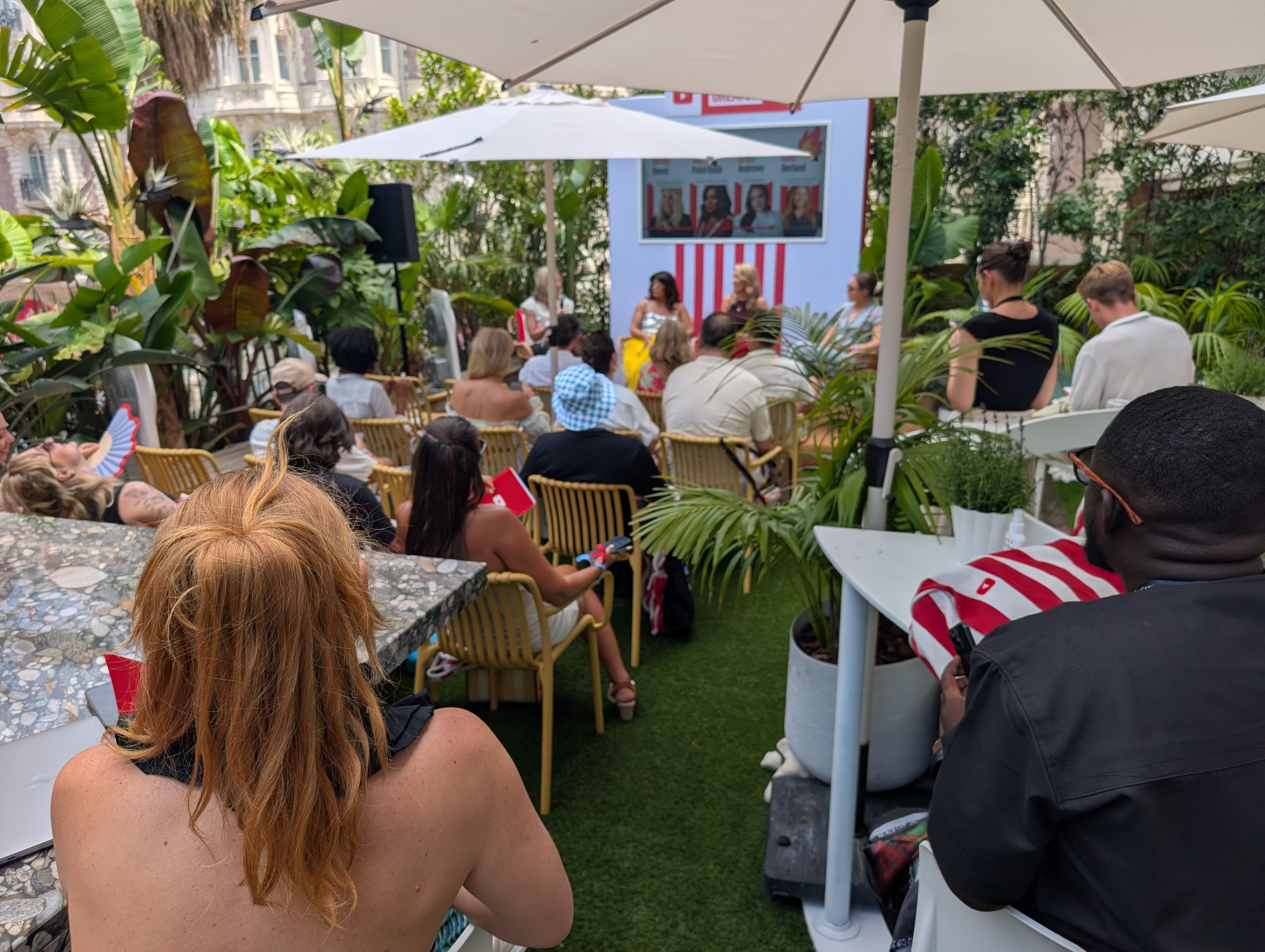
The most radical document of the week
How did we get here? I am implicating myself again. For two decades the industry has wanted advertising to fit in a box. Wanamaker's old line, half my advertising is wasted and I don't know which half, has haunted every marketer who ever had to defend a budget. So when the ad tech companies arrived promising measurability, that they could finally tell us which half, of course we fell for it. I fell for it. There is enormous relief in a number. A number is a thing you can put in a deck and a thing that lets a CMO sleep.
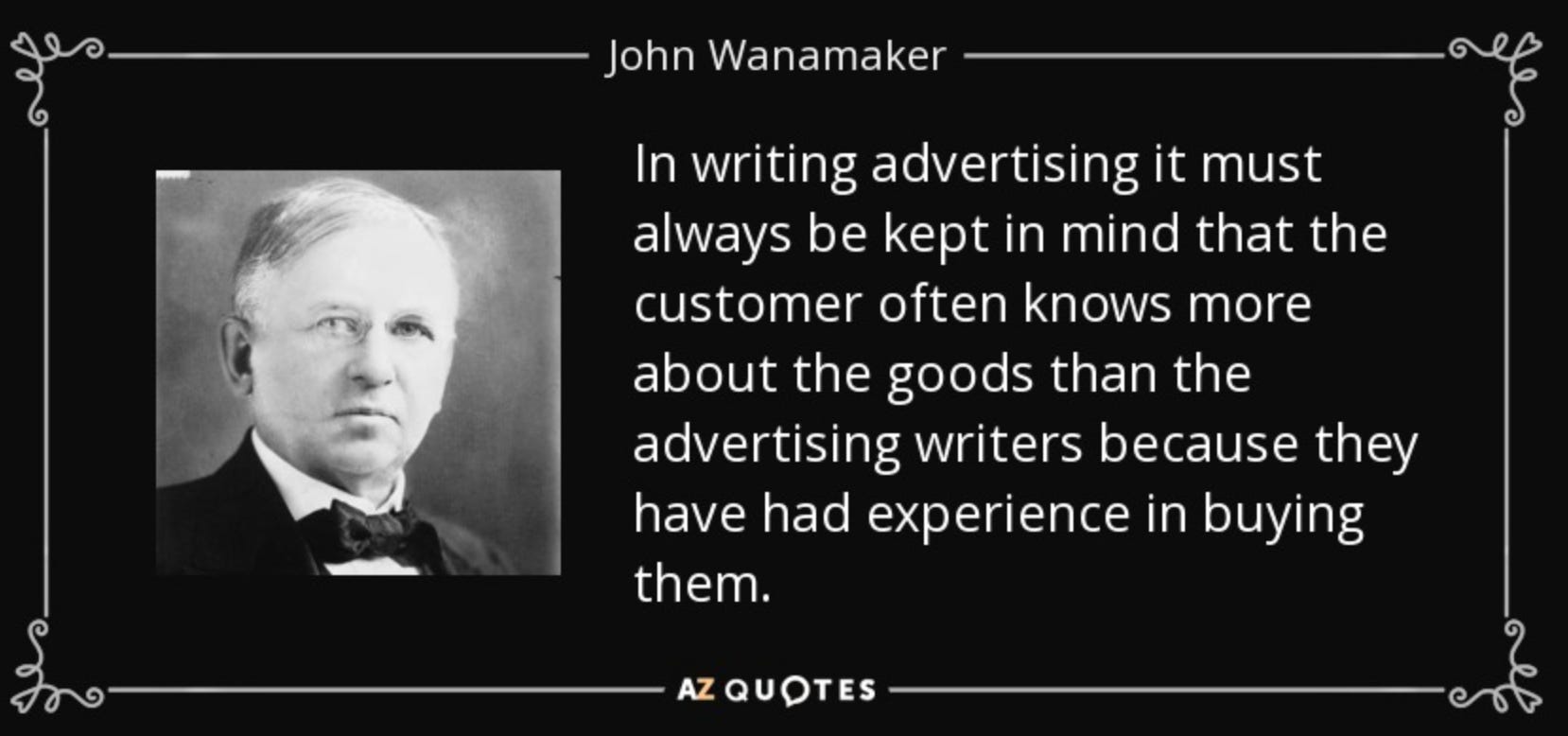
The trouble is that brand has never lived in the number. Brand is instinct, taste, timing, and how you make someone feel in the half-second before they decide. It does not fit the box, no matter how badly we want it to.
Which brings me to the most quietly radical document I saw all week. The Creator Effectiveness Playbook, from WPP Media, System1 and TikTok. One of the largest datasets yet on this stuff: 1,217 paid ads, eight markets, 182,550 people, $70.5m of media. You would expect a report like that, from those names, to be a love letter to measurement. It is the opposite.
It found that Engagement Rate, the metric the entire creator economy leans on, the likes and the views and the follower counts, explains around 0.2% of whether anyone remembered your brand. Not 20%. Zero point two. Across 129.6 million engagements, no meaningful relationship. It found that 44% of marketers run creator campaigns with no KPIs at all. The thing that does build memory, by a distance, is emotion, plus a brand showing up early enough to get the credit for the feeling.
The spreadsheet, followed all the way down, arrives back at the soul.
We were never choosing between data and soul
This is the bit I think we are getting wrong, collectively, in the great rush to whatever is next. We think we are choosing between data and instinct, between the measurable and the magic. The evidence says they were never opposites. The same report shows 84% of purchases go to brands people already leaned toward before they started shopping. Being remembered before the moment is the whole game, and being remembered is a creative problem, not an engineering one.
You can hear it even in how the biggest spender in the room talks. Leandro Barreto, Unilever’s global CMO, was at pains to say the creator push is not about chasing cool.
“It’s because we believe this has more return on investment, that this helps us build the brands, to drive more trust, to drive more credibility.”
The smart money is not buying reach.
It is buying trust.
Which is just brand by another name.
The brilliant minority
The same playbook found that only 29% of creator ads beat the average brand ad, and the top 10% do four times the work of the rest. They call it the brilliant minority. So the real story is not "creators work." It is "creativity works, and creators are a brilliant way to carry it, when the work is actually good." Same as it ever was.
Which is exactly what that Grand Prix was trying to tell us.
Creativity is not under threat from AI. The proof was holding the biggest trophy in the building.
If creativity is under threat from anything, it is from apathy, from a quiet loss of interest in the actual craft while we chase the thing we can count.
Don’t build a new velvet rope
So I will say the unpopular thing, from the inside, as one of the people who turned up with a ring light. The creators have arrived, and thank god, B2B creators especially are some of the sharpest, most influential people in this industry, and it is about time they got the attention and the money.
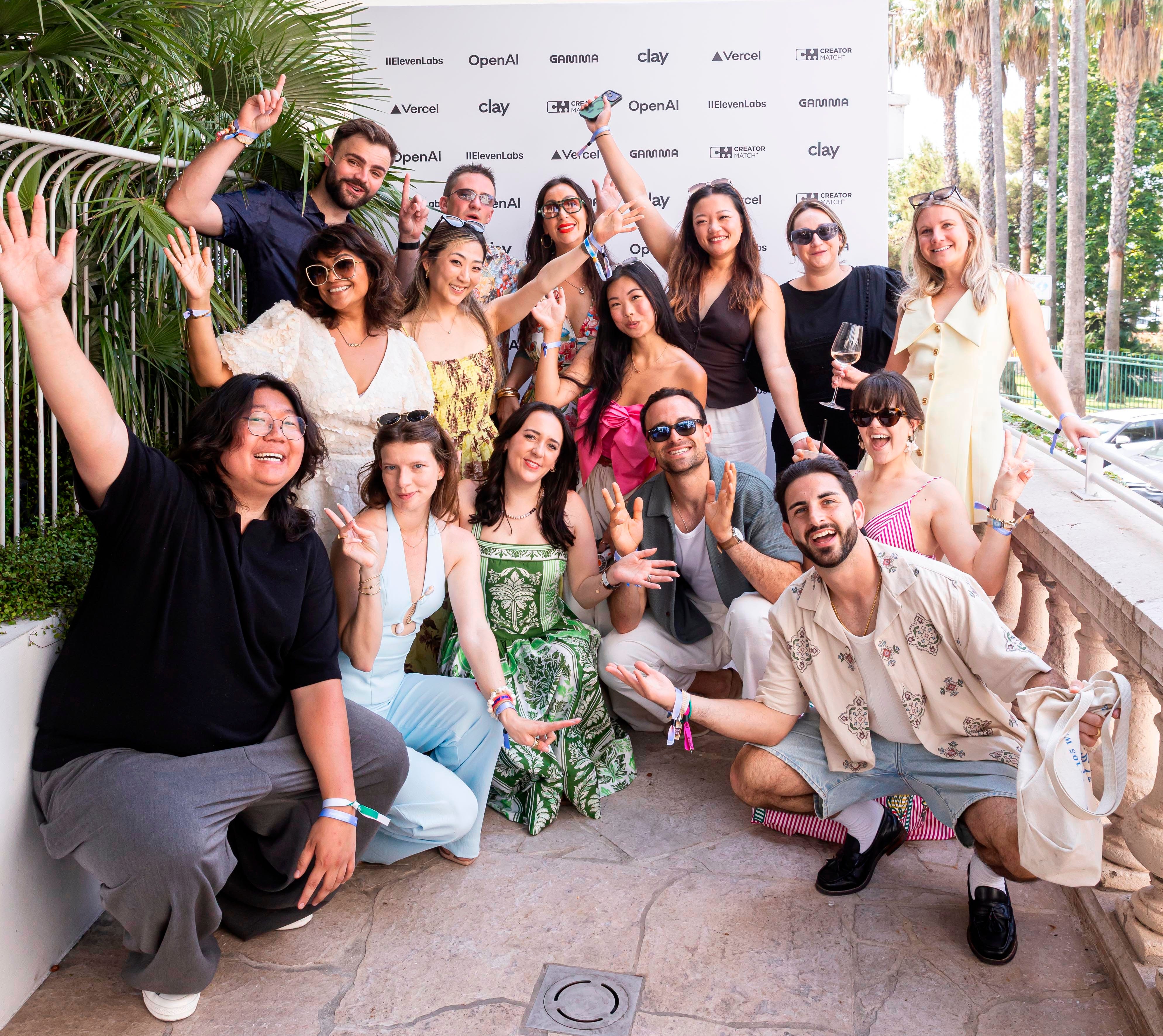
But we are at a fork. We can integrate, or we can build a brand new velvet rope. And I watched, more than once, people who had spent years being kept out of the room start keeping other people out of it. The ones without a title worth their time, or a follower count worth their glance.
We who just got let in do not get to pull the ladder up behind us.
We have done exclusion before in this industry, and dressed it up as taste. Let’s not be so proud of doing it again, just with different bouncers.
Where was WPP?
The old order felt it too. There were genuinely new faces on the Beach, the Female Quotient and Canva among them. But walk the Croisette and the big networks were conspicuous by their absence. Dentsu aside, they barely registered. Omnicom had a cove tucked round by the harbour. I could not find a home for WPP at all. Make of that what you will.
Meanwhile the independent creative agencies were having the time of their lives, winning the work and owning the energy. My friend Rachel Lowenstein put her finger on why, talking about how independent strategist-creators carry a cultural capital the big agencies cannot always manufacture. That is the shift in a sentence.
The loudest silence on the Croisette
There was one more silence, and it was the loudest thing on the Croisette. The word DEI had, as far as I could tell, been quietly retired. Pride snuck in here and there, the Female Quotient held brilliant conversations, the WACL + Propeller Empower Café had the most interesting agenda going. But the broader conversation, about the bias baked into AI, into the work, into the stories we are about to tell at scale, was simply gone.
What stings the most? The sums spent on those in-person activations were, frankly, obscene. Staggering, beautiful, and obscene. Many of the very same brands that found that money are the ones who will tell you, all year long, that they have no budget to support the organisations working to get more women, more disabled people, more people from underrepresented backgrounds into this industry and keep them here.
No budget for that. Plenty for the beach.
I wondered, quietly, how the people those same companies laid off this year feel watching it. Told the cutbacks were unavoidable, the jobs simply had to go, and then shown a Croisette glittering with spend of no especially obvious return. When the world is genuinely on fire, and for one week in June it really did feel like it, we all just agreed to suspend our disbelief.
So, what now?
If you are a marketer: stop scoring creators on likes. Score them on whether anyone remembered you. Brief for emotion and for the brand turning up in the first two seconds, and treat creators as a brand-building force, not a distribution hack you bolt on at the end.
If you are a creator, and I am talking to myself here too: build the brand, not just the audience. Corey Martin called it the shift from the creator economy to the community economy, and the data backs him, a smaller, engaged room beats a big indifferent one every time. Learn the unglamorous craft of being remembered. And hold the door open. Your reach is worth more when the room behind you is full.
If you are the industry: do not let “measurable” quietly redefine “valuable.” The two are not the same, and the moment we forget that is the moment we make a lot of beautifully optimised work that nobody feels and nobody remembers.
See you in the small rooms
My closest observation all week was not on a stage. It was the sheer number of people, clever, senior, accomplished people, quietly pretending to understand AI because they are terrified of being left behind. That is the work I am giving my time to now. Not because it is worthy, but because the next few years will sort this industry into the people who got a fair shot at what is coming and the people who did not, and I would very much like that line not to run along the usual fault lines of who had access and who did not.
Cannes was hotter, more expensive and more confusing than I have ever known it. The creativity was not actually missing. It was up on stage holding a Grand Prix for an ad about the relief of not being sold to, while the rest of us were outside on the beach, selling. And it was in the small rooms nobody thought to film.
See you there.
Nish x
Sources: The Creator Effectiveness Playbook (WPP Media, System1 and TikTok, 2026); How Humans Decide (WPP Media and Saïd Business School, Oxford, 2025); Claude’s Film Grand Prix win reported by Adweek and Ad Age; Leandro Barreto quoted in Marketing Week.
Thanks for writing this Nishma - interesting to hear how AI is playing out at these kind of events. I was very intrigued to hear how things are changing from a creator economy to a community economy as well - I've been hearing this a lot, it's less about the numbers and more about the engagement. As a woman in her 50s did you get a sense of whether advertisers are at all interested in our cohort (considering we are a huge opportunity for them) or are we still merely an after thought and misunderstood? Are there any women over 50 left in advertising?! I'd be intrigued to know!