



13%.
That’s how many of the executive seats in AI companies belong to women.
LinkedIn just ran the numbers on 15,000 companies across 27 countries. Tens of millions of workers. One result, everywhere they looked: the rooms where AI gets decided are 87% men.
The report calls it the triple penalty, which sounds like a darts rule and works like compound interest in reverse. Penalty one: be a woman anywhere near a C-suite. About fifteen points off your share. Penalty two: be in an AI role. Nearly ten more. Penalty three: work at an actual AI company. Another five. Women are 45% of ordinary workers in ordinary jobs. Stack the penalties and you arrive at 13.
Every one of the 27 countries shows the gap. No industry has cracked it. The startups writing the next decade are worse still: at smaller firms, women hold under 12% of the AI executive seats.
The trend line should embarrass everyone. In 2025, women were 26% of new AI hires, against half of everything else. “Member of Technical Staff”, the hot new AI-lab title that has nearly tripled since 2021: 18% women. Head of AI: 20%. The market doubled, the salaries doubled, and women’s share of the hiring went down.
Money makes the plot obvious. In the US, an AI role now pays more than twice a non-AI one. Within AI jobs, every ten extra percentage points of male hires lines up with roughly $45,000 more on the advertised salary. In normal occupations that same gap is worth about $10,000. The second the jobs turned to gold, the doors narrowed.
One detail made me want to lob my laptop into the Thames. The most gender-balanced job in the entire AI economy is Data Annotator. The lowest-paid one. Hourly, project-based, the piecework of the machine age. Women are more than half of those hires.
Women aren’t missing from AI. Women are in the basement of AI, labelling the data, while the penthouse holds its meetings.
“Women just aren’t as interested in tech.” That old song. Bollocks. Women are half the hires in AI’s worst-paid job and 13% of its best-paid ones. Interest was never the problem.
I have seen this film before. Thirty years in this industry, ten of them at Google, and I can recite the plot with my eyes shut. A new technology arrives. Everyone declares that this one will finally level the field. The field tilts, again, in the familiar direction, and everyone looks terribly surprised.
Except the stakes this time are higher than any rerun before it. Earlier tech waves made products and fortunes. This wave makes decisions. Who gets shortlisted. Who gets the loan. Whose scan gets a second look. Who a predictive system flags walking home. Feed it data from a biased world and it will reproduce that bias at industrial scale, politely, forever.
LinkedIn’s own policy lead, Sarah Steinberg, warned that the AI economy “risks being shaped without the perspectives and talent of half the workforce”. Half. Our futures are being written, yet again, by men. Not even a representative sample of men. A very particular guest list.
You can watch the same physics at the crowning ceremony. TIME has named the 100 most influential people in AI every year since 2023. It counted the women just once, in that first year: 41, by its own tally. Nobody has published a number since, so I counted the three lists that followed myself. They land around 30 every time; this year holds 31, with 5 women among the 26 Leaders, the category where the chief executives sit and the money lives. Half the women who do make the list are builders, which tells you women are absolutely building this technology; they just thin out exactly where the pay and the decisions live. One drop, then a flatline. Three years of the loudest boom this industry has ever had, and the number will not budge. (Whitney recommends hyperlinking “I counted” to https://time.com/collection/time100-ai/2026/ — it shows the working.)
Meanwhile, the mood among women is curdling, and honestly, who could blame us. Glassdoor read a year of its own employee reviews: men talk positively about AI at work 45% of the time, women 32%. For Gen Z women it falls to 21%, and the analysts checked, it cannot be explained away by industry or job type. Women are looking at who wins in this economy and drawing the obvious conclusion.
The obvious conclusion is a trap. Opting out of AI is not neutral. Every woman who quietly decides this technology is not for her hands another seat to the men already holding 87% of them.
The other version of this story already exists, and I stood inside it.
OpenAI ran a Women in AI event recently, and the thing that struck me hardest was how fantastic that room was. Brilliant, bright women everywhere: the speakers, and just as much the ones who weren’t speaking.
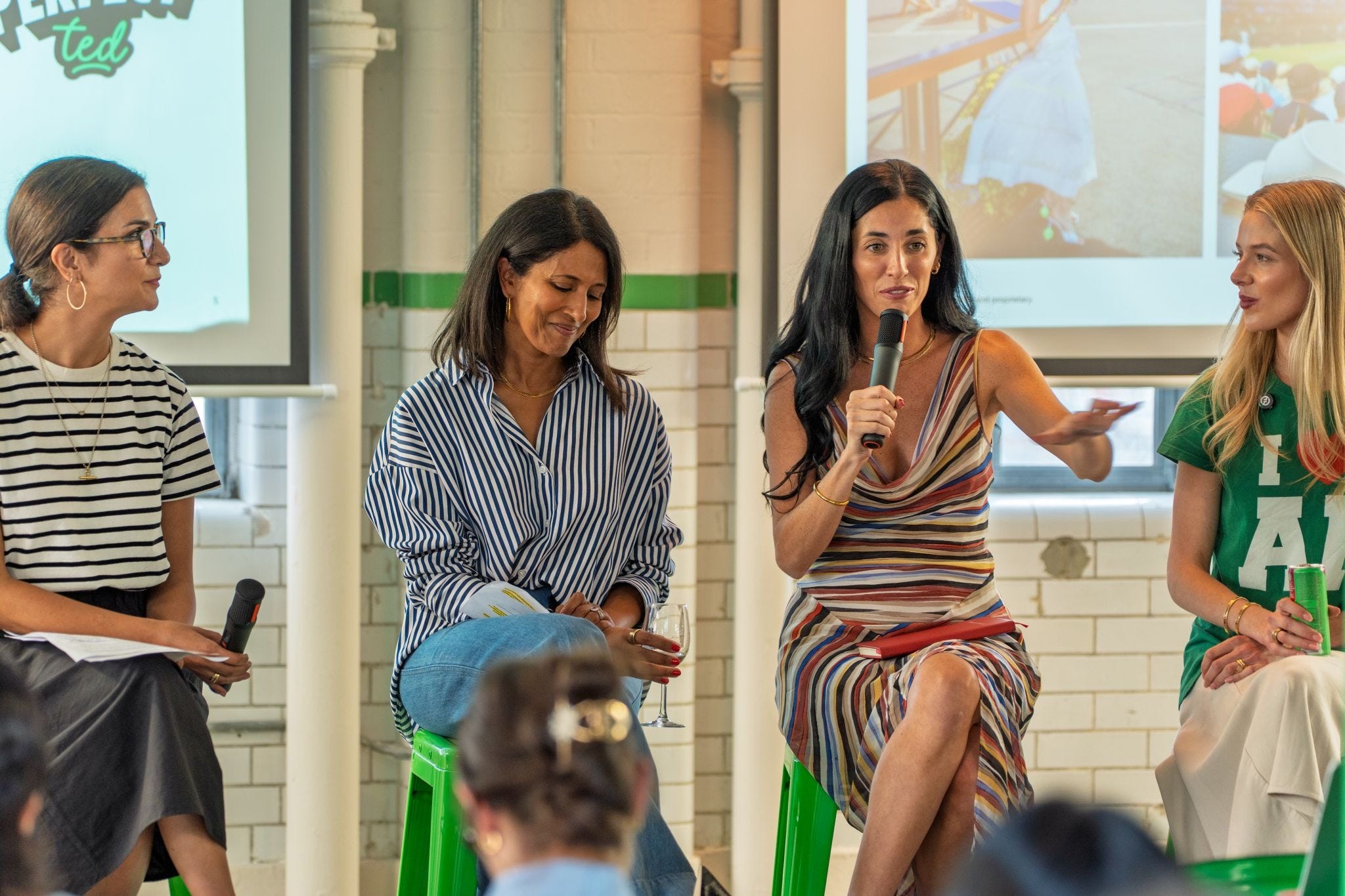
Head of marketing at openAi -the amazing Leila Woodington - held a conversation with 3 brilliant women all using AI in different ways:
Tara Keeney of Look Who I Found, working with AI to shrink weeks of research prep so the human conversations get the hours.
Marisa Poster of PerfectTed, who made AI fluency mandatory across her company and reaches for it to support her neurodivergent team.
Anouska Ruane of Soho House, automating the admin on purpose to protect the relationship time.
No keynote fantasy anywhere. Just capability, on an ordinary Tuesday, in women’s hands. Rose Gibbons of Linkedin was in that room too, and her write-up afterwards, and sharing the Linkedin in research, is half the reason this essay exists.
One thought followed me home, though.
A room like that is the 1%. Which is wonderful. What about the other 99%?
Everything I’m about to ask of you flows from that question. We need as many women as possible in key leadership roles, building businesses, growing their own, experimenting and playing with AI, because we’re the ones who will make sure it works for everyone, not just the 1%.
So, my plea. Three of them.
If you’re a woman reading this: start this week, exactly where you are. Pick one real task, the report, the research, the presentation you’ve been dreading, and do it with AI beside you. Then say so. Out loud, in the meeting, on your profile. Capability kept secret changes nothing about the guest list. The leadership gap opens at Director level, long before any C-suite, so put your hand up for the AI project now, not when you feel ready. Nobody in the 87% waited until they felt ready.
If you run a company: count your AI hires this quarter. The industry managed 26% women last year; find out whether you did better, and ask why out loud if you didn’t. Grow women into AI roles at Director level rather than parachuting one Chief AI Officer in for the annual report photo. Publish the pay. A $45,000 gap survives on secrecy and dies in daylight.
If you build rooms: build them on purpose. The women above didn’t find each other by accident; someone convened them. Community is not the soft bit of this. It’s infrastructure.
I’m building one myself. The next Switched ON Session is a dinner in London called Don’t Marry the Model, where I’ll show you how to build your own AI operating system. Building mine is the most useful thing I have ever done: a portable system of your own preferences and processes, so you can switch tools whenever you like and never end up wedded to one.
No technical background needed. Bring a laptop and an appetite. If you want to be in a room with other women learning to work with AI, connecting with each other, sharing your worries as well as your wins, then join us.
Save me a seat → click here
Consider it my answer to the 99% question.
AI could be the greatest leveller. So long as we all get the key. All 100% of us.
The future is still a draft. Drafts get rewritten by whoever turns up holding a pen.
Pull up a chair. Bring your sequins.
Tell me the task you’re picking this week. I read every reply.
Nish x
I’m Nishma, and I help people get Switched ON to AI.
Less overwhelm, more time and freedom, and a brand that stays unmistakably yours. If you’re midlife, brilliant, and tired of being told you’ve missed it, you’re exactly who I do this for. Come and find out more at nishma.co.
One thing I keep wondering is what happens before leadership. Who gets the first opportunity to accumulate AI experience now? If women are underrepresented in the roles being created today, that gap can compound for years.
This is great Nishma- one of your best and by your standard that’s good anyway. Sorry I’ll miss next week but aiming for future one’s.