


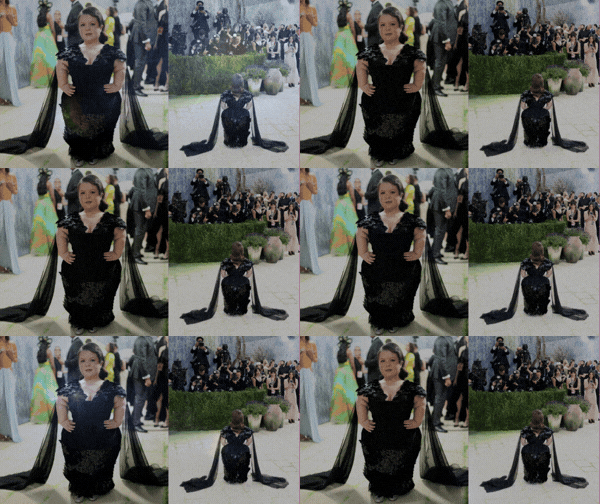
The first Monday in May is known as Met Monday. And this year, my friend Sinéad Burke walked into the Metropolitan Museum of Art as a member of the 2026 Met Gala host committee. Beyoncé co-chairing. Nicole Kidman. Venus Williams. Anna Wintour. And Sinéad. From County Meath. Former primary school teacher. The girl who used to write outfits into her diary because the fashion world refused to make anything in her size.
I’m still scrolling photos still ugly-crying at joy for her and all that she has done!
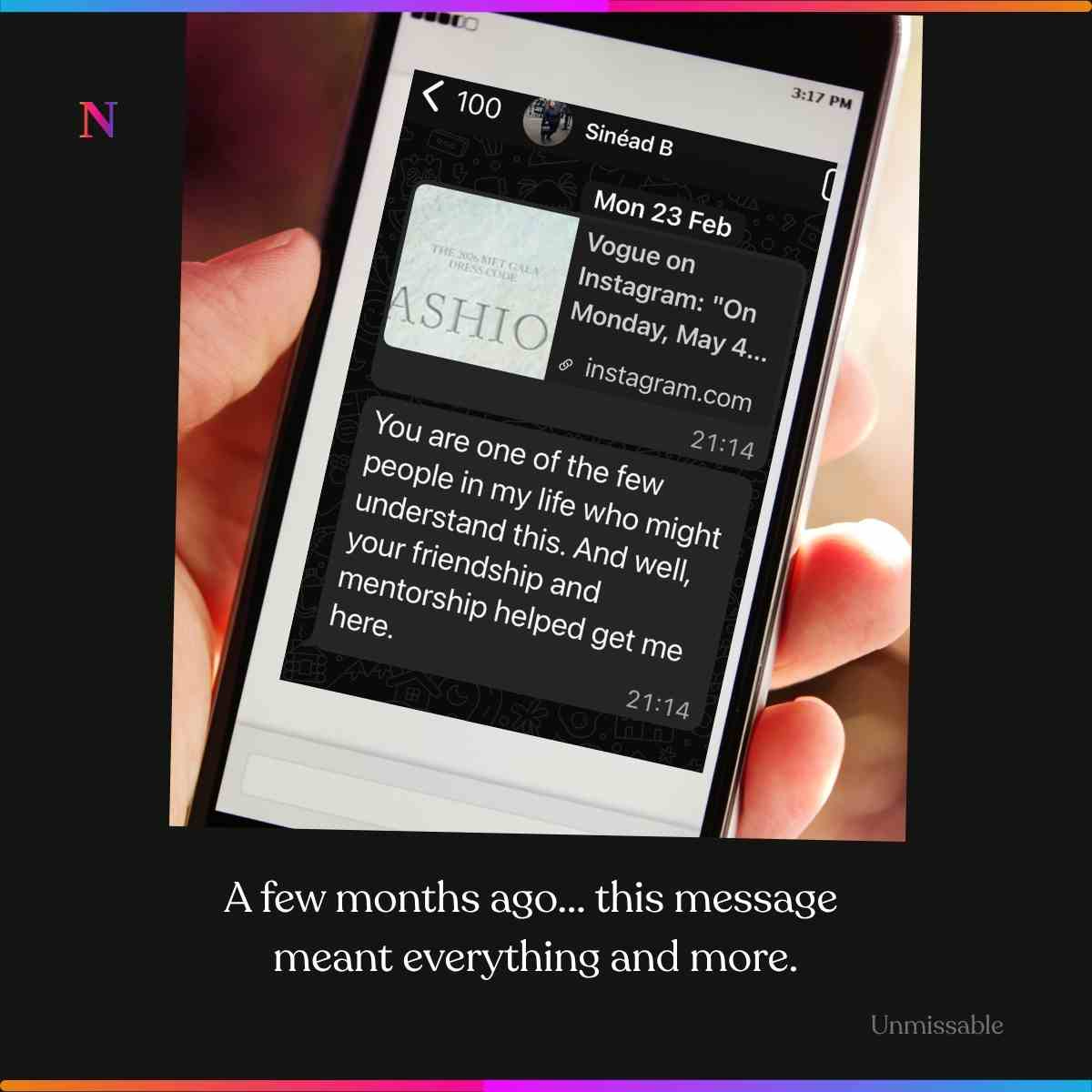
A few months ago, she sent me a WhatsApp. Just a Vogue link, and one line:
”You are one of the few people in my life who might understand this. And well, your friendship and mentorship helped get me here.”
That message means more to me than any plaudit, board seat, award speech, or magazine feature I’ve ever had. Because every now and then, the universe gives you a receipt: the small thing you did, years ago, with no transaction in mind, mattered.
Co-chair, Beyoncé. Co-host, Sinéad.
Beyoncé arrived on the carpet in a sparkling, almost skeletal dress, with Blue Ivy on her arm and Jay-Z behind her. She co-chaired the 2026 Met Gala. The most powerful woman in pop, the woman who breaks the internet just by walking down a flight of stairs, set the tone for the night.
And on the same host committee, in the same building, in the same official line-up: Sinéad.
That sentence is the whole story.
Once you understand that the Met Gala host committee is the building’s stamp on who counts as fashion’s house, you understand what the night was. Sinéad wasn’t a guest. She wasn’t a plus-one. She wasn’t a feel-good cameo for a one-night news cycle. She was a host of the night the Met chose to call its own.
Same status as Beyoncé. Same line-up. Same building.
That’s not a moment. That’s structural.
The girl who dreamed of fashion’s biggest night
She used to write outfits into her diary. A girl from County Meath who could not find her size in any of the magazines. Who dreamed of fashion’s biggest night, knowing that world was not built for her.
Last night she walked in. Not as a guest. As a host.
This is what *invisible to unmissable* actually looks like. Not a moment. A relocation.
A primary school teacher walked the same red carpet as Beyoncé, named on the same host committee, photographed in the same press line, and stayed there.
The Going Out dress in the Wintour wing
In April 2024, on a free afternoon in New York, I wandered into the Met not knowing what was on. I drifted up into the **Anna Wintour Costume Center**, where the exhibition *Women Dressing Women* was running. I rounded a corner and stopped dead in front of a mannequin in a black satin “Going Out” dress.
It was Sinéad. Her body. Her hair. Her shape. Modelled, the placard told me, for *Customiety*, the Danish brand founded by Jasmin Søe in 2021 to make beautiful clothing with the achondroplasia community, not for it. Mannequin commissioned by National Museums Scotland. Wig by Evanie Frausto. A whole supply chain of love and design and bloody-minded competence, ending in this: my friend, in black satin, going out.
I stood in the middle of a gallery of strangers and welled up. Not because I was surprised. Because I wasn’t.
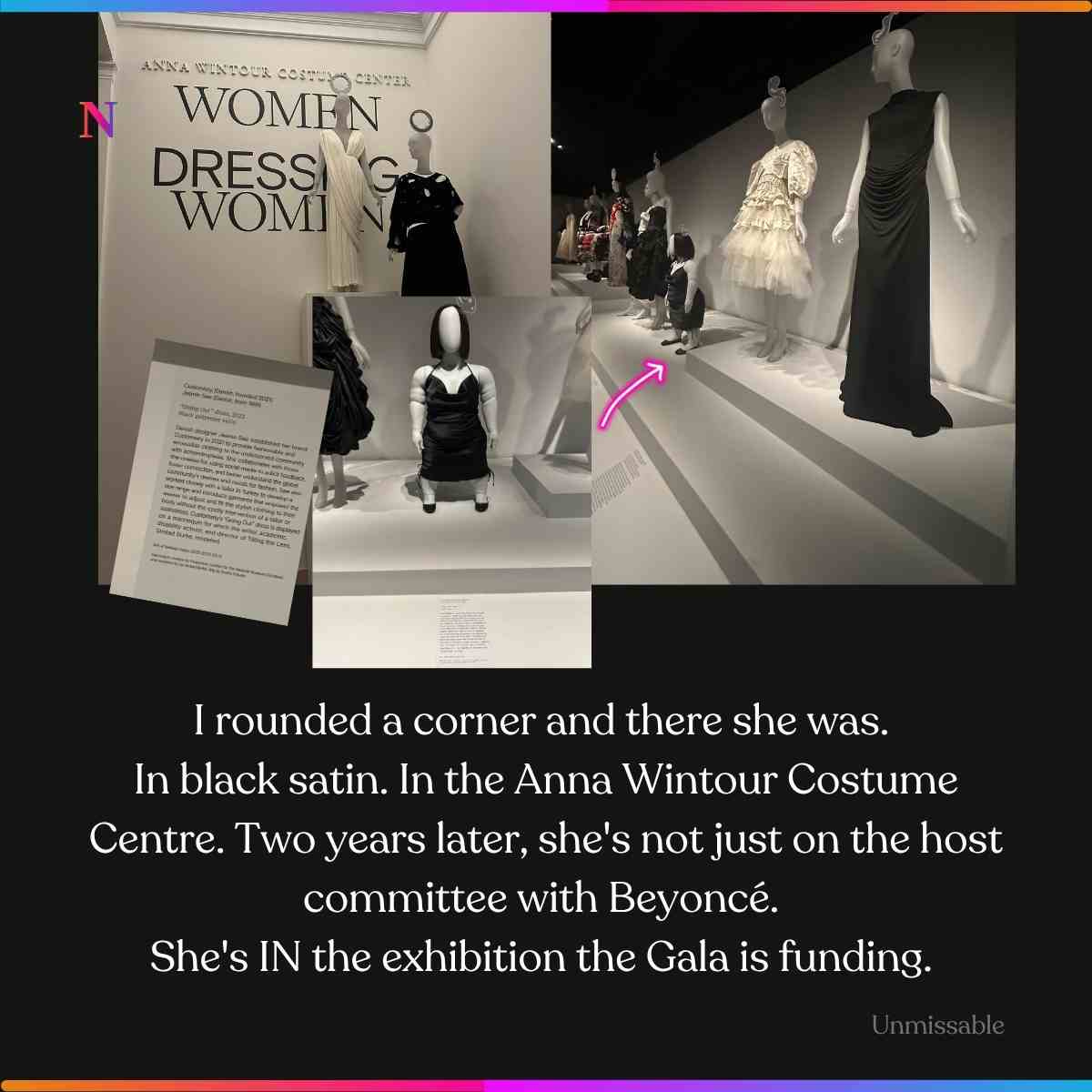
Two years later, the same building hosts her at the door.
Seven years. From first ever, to host.
She had been at the Met before that, too.
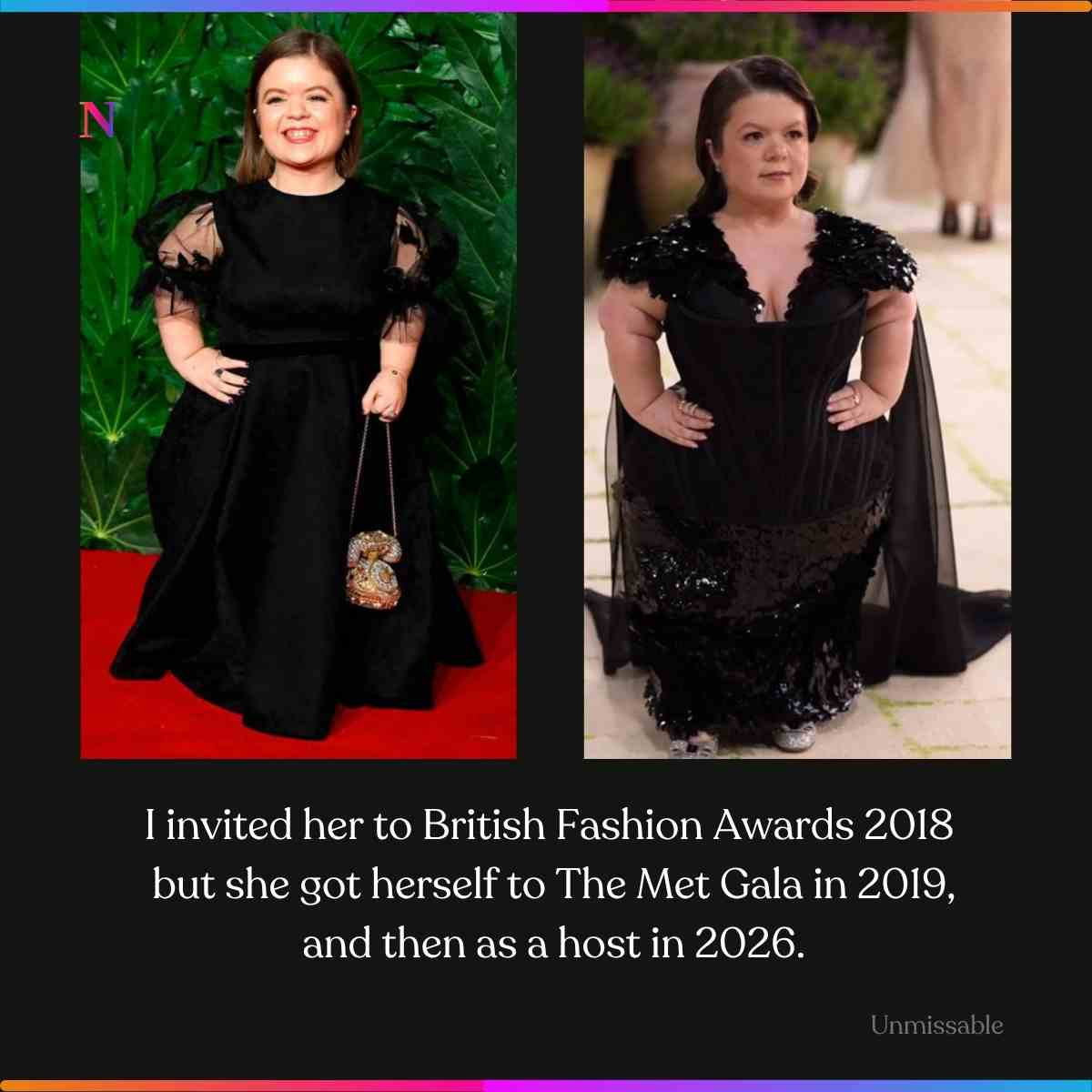
In 2019, Sinéad walked the pink stairs as the first little person in history to attend the Met Gala. In custom Gucci. Dancing with Katy Perry around an immersive Moschino hamburger. The dress now hangs in the Gucci Garden Museum in Florence.
Before she walked in that night, she led Condé Nast’s Anna Wintour through an accessibility audit of the venue.
In her own words this week, on the Tilting the Lens journal:
”In 2019, great consideration of my accessibility needs were taken into account. In the proceeding six years, I’ve invested my time and energy to ensure that change is not just for me.”
Read that sentence again. Slowly. That is the entire thesis of this essay, in twenty-three words from the woman herself.
The access route into the Met last night was her work, with her team at Tilting the Lens. The Met steps are 154 feet wide and 13.5 feet high, designed in 1975, protected as a National Historic Landmark. They cannot be ramped. So she designed a different way in. The step-free 81st Street entrance. Ramped queueing. Equal red-carpet positioning for disabled attendees.
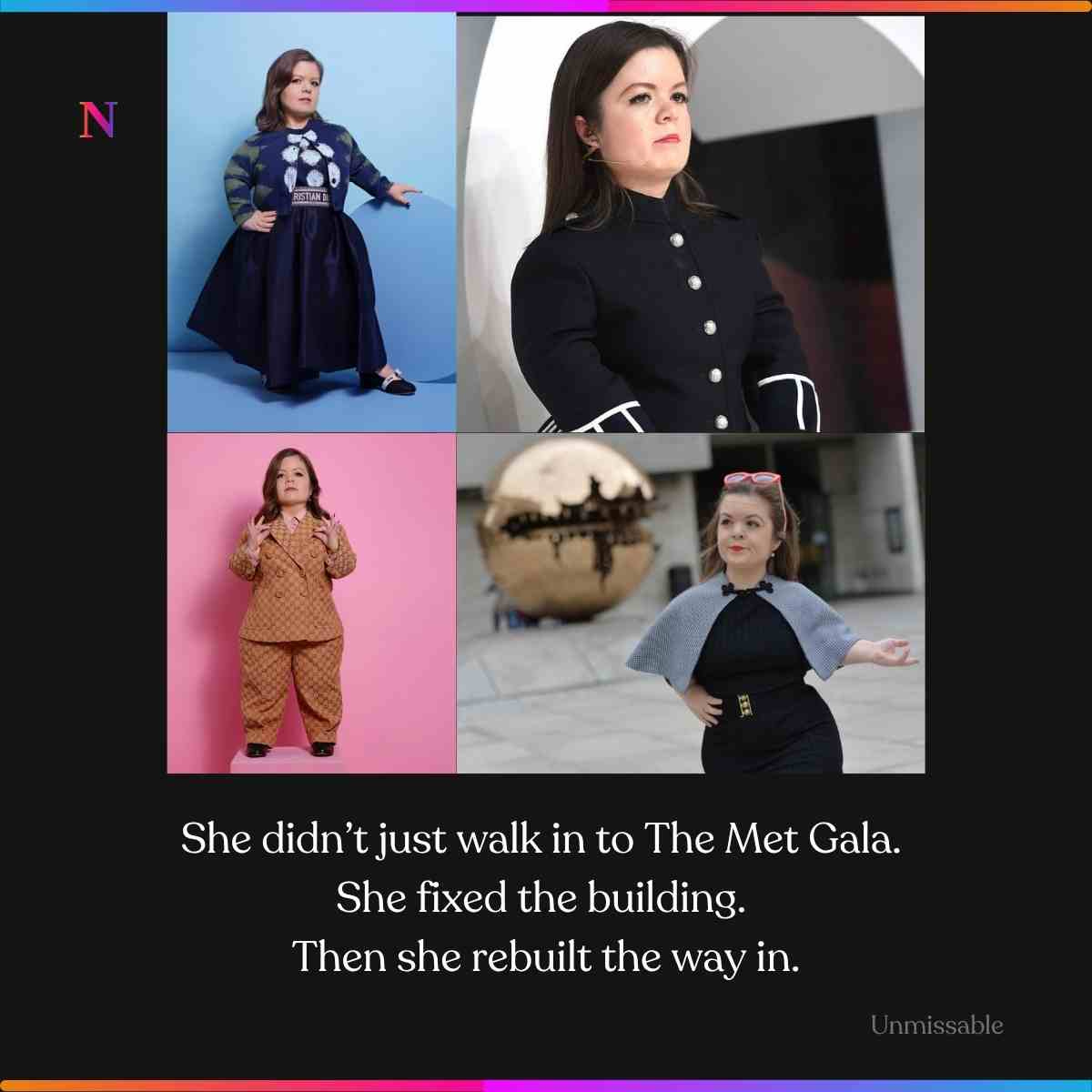
She did not just attend the Met Gala. She fixed the building.
Then she rebuilt the way in.
Seven years later, she is not a guest. She is a host.
That is what one career of refusing to be ignored builds. Change for all, not just one. In her words.
Two presences, one woman
Last night’s Met Gala was for Costume Art, the new exhibition opening 10 May. Curator Andrew Bolton has commissioned 25 new mannequins, bodies long ignored by art history. Disabled bodies. Corpulent bodies. Real bodies. Nine living people had their bodies digitally scanned to make them, including Sinéad, Aimée Mullins, and Aaron Rose Philip. Polished steel surfaces, so the visitor sees themselves reflected in the figure on the plinth.
So Sinéad didn’t just host the Met Gala. She is *in* the exhibition the Gala is funding. Again. Twice over now. In couture, in steel, in committee, in chair. Once is a moment. Twice is a movement.
The teacher who would not be sized down
Sinéad’s story is not a “she came from nothing” fairy tale. She came from somewhere very specific.
Her parents founded Little People of Ireland in 1998. She grew up loved. She graduated top of her class at Marino Institute and went on to teach ten-year-olds who were often taller than her, and held the room every single day, because she earned it. Respect, admiration, trust. That’s the architecture under everything she does.
When she was eleven, her family was offered limb-lengthening surgery. She said no. At eleven. She chose her body.
In her book, she puts that decision on the page as a list. On one side, the pros of having the surgery: avoiding playground jibes, the ability to reach light switches, not needing a head start in the egg-and-spoon race. The other column has one entry, rendered in capitals: **BEING ME**.
That decision is the red thread that runs through every other one she has made since.
The fashion blog came from a college assignment. Her first post was about Cate Blanchett at the Oscars. When her siblings got bored of her fashion chat, she put it on the internet instead. Then came the TED talk, *Why design should include everyone*.
If you have not watched it, watch it. She tells you about being wheeled through airports, not because she needs a wheelchair, but because the terminal was not built for her. About public bathrooms where she cannot reach the lock, having to ask strangers to stand guard outside the stall, and leaving without washing her hands because the soap dispenser is too high. About baristas who cannot see her over the counter when calling “next,” then handing her a hot drink without a lid because the conversation never made it that far.
Her line, learnt from Stella Young’s brilliant “I’m not your inspiration, thank you very much,” is what saves the talk from inspiration porn. She is not asking for sympathy. She is asking for empathy. The valuing of the preciousness of a life.
Two completely different transactions.
It has not been pretty. She has been attacked in the street. One incident: a teenage boy leapfrogged over her in Dublin while another filmed it for a laugh. I have heard her tell that story. I have never been the same since.
What I have watched Sinéad do with that pain is the bit I will never stop being awed by. She did not shrink. She wrote an op-ed in Vogue vowing to speak to every primary school child in the region. Then she did it. All of them. Pain into syllabus.
She decided that if the world would not look at her with kindness, she would build the world a new pair of glasses.
I have hosted her. Interviewed her. Invited her on stages, including a British Fashion Awards moment I will never forget, because I have never, in my life, watched anyone work a room like that woman. She does not attend events. She arrives
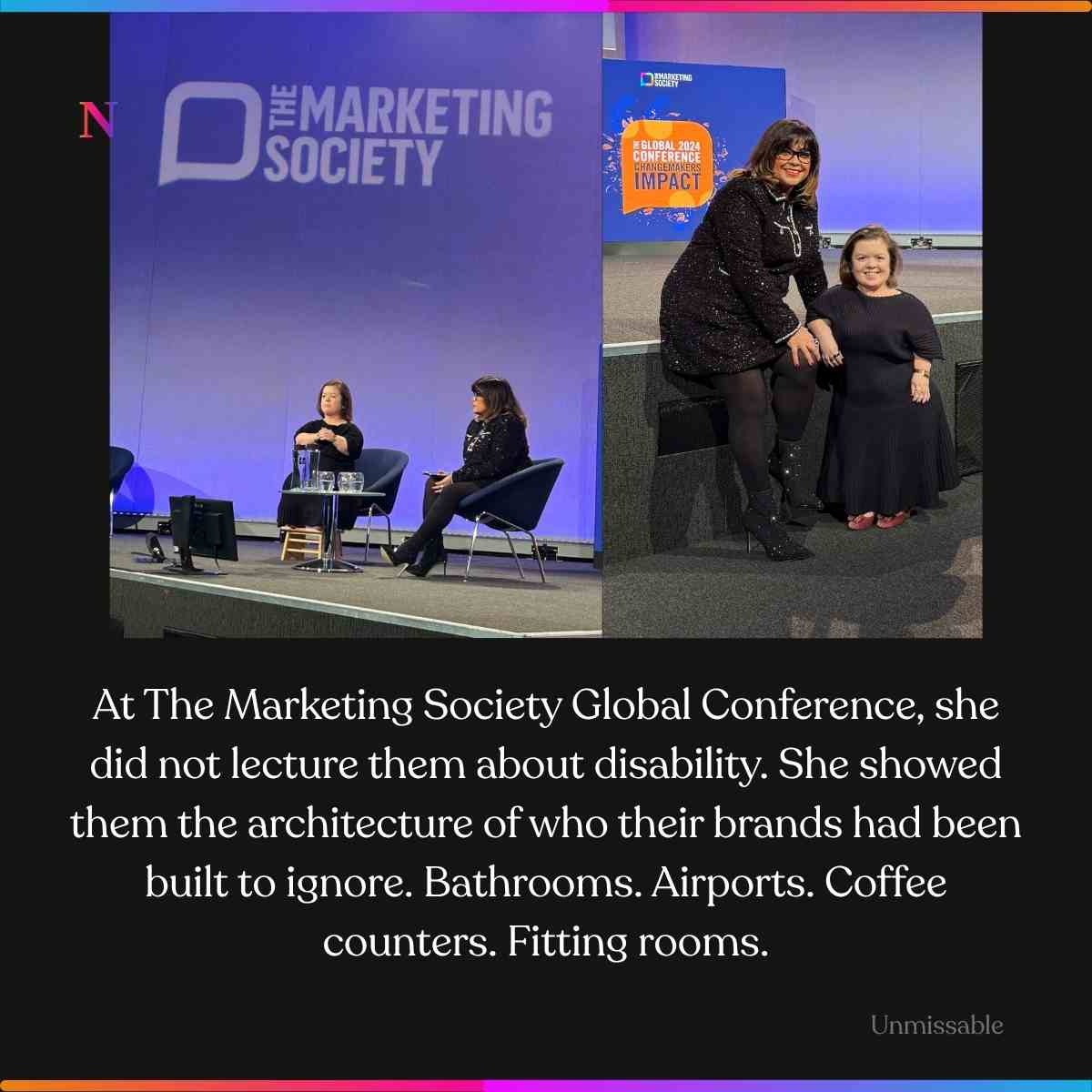
A few years ago I shared the stage with Sinéad in front of a room full of top UK CMOs. One talk. Twenty minutes. She did not lecture them about disability. She showed them the architecture of who their brands had been built to ignore. The bathrooms. The airports. The coffee counters. The defaults. The room shifted. Not posture-shift. Permission-shift. CMOs called me afterwards saying “that was the most useful twenty minutes of my year. What do I do on Monday.”
Tiny acts. Big impact.
I learned more about how brands actually get built from watching her work that room than from any deck I ever wrote at Google. Your job, more often than not, is to bring new ideas and new people to the people you serve. To help others be seen. Be heard. Be considered. To open the door, and then step out of the way.
That is how trust is built. Everything else is decoration.
Visibility is not vibes. Visibility is infrastructure.
The marketing world keeps missing this.
We talk about representation as posture. A campaign. A nice line in the annual report. Sinéad’s life is the long, unglamorous proof that representation is structural. She did not just become the first little person on the cover of British Vogue. She founded Tilting the Lens, a consultancy intentionally staffed by disabled people, advising Gucci, Ralph Lauren, Burberry, Chanel, Pinterest, Netflix, Starbucks. She does not fix accessibility for brands. She rewires the system that decides who gets considered in the first place.
In her own words:
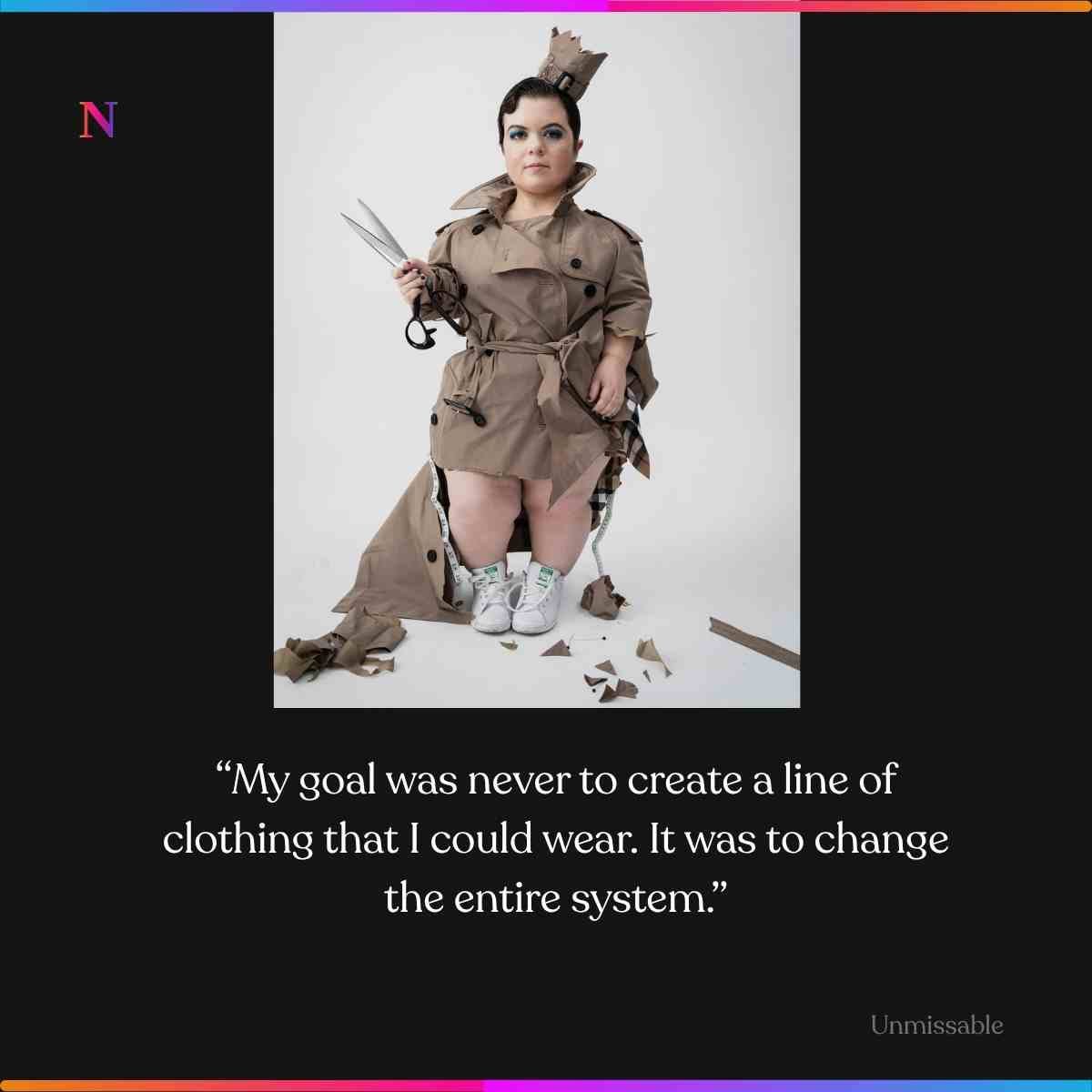
”My goal was never to create a line of clothing that I could wear. It was to change the entire system. Which tells you everything you need to know about my personality.”
That is the whole token-versus-translator argument in one sentence, from the woman herself.
She is also not just advising those brands. She has donated two pieces from her own wardrobe to the Met’s permanent collection. The Tim Walker / Burberry trench (the photographer literally took massive scissors and cut a coat to fit her, on camera, for Business of Fashion). And an Alexander McQueen dress.
Why those two? To seed doctoral research on disability and design. To fund the examination of ableism in design systems. To leave the building richer than she found it. To pay forward into the curriculum.
That is what change-for-all looks like, in cold institutional terms.
Not a campaign. An endowment.Change for all. Not just one.
That is the whole game. Tokenism gets a single body in the door.
Translation gets the door rebuilt.
She wrote a children’s book, “Break the Mould”, during the lockdown of 2020. It won Specsavers Children’s Book of the Year. The thing it teaches kids is the thing every adult brand leader I know still struggles with: uniqueness is not the obstacle to belonging. It is the route to it.
This matters commercially, and we should stop pretending it doesn’t.
One in two of us will, at some point, experience some form of disability. Temporary. Permanent. Visible. Invisible.
The “disabled consumer” is not a niche segment.
It is every consumer, eventually. The combined spending power of disabled consumers globally is roughly the size of China’s economy. Sit with that.
And, in Sinéad’s own framing this week:
”If disabled talent can’t access the red carpet, fashion brands won’t sponsor their ticket. It’s a self-fulfilling prophecy.”
The entire industry has built that loop and forgotten it was a choice.
Brands designing for it now are not being kind. They are being early. And early is where the money is.
The next exclusion is being trained right now
The argument Sinéad has been making for twenty years is about to repeat itself in a brand new substrate. And almost nobody in the AI conversation is naming it.
The image-generation model trained on the same fashion archive that refused to make her size. The recognition system that does not see her over the counter, this time because the dataset of bodies it learned from looks nothing like hers. The AI assistant that reads the same airport signage and routes her the same wrong way, only faster.
Accessibility was never about ramps. It was about who gets considered when the system is being built. AI is the largest, fastest “system being built” in human history. And most of it is being built by the same people, with the same defaults, in the same rooms that did not consider her in the first place.
Sinéad’s line, ”from compliance to creativity,” is the whole AI thesis dressed up as accessibility. Brands treating AI as a compliance hire (automation, cost-cut, governance) will lose to brands treating AI as a creative hire that finally lets them include the people the old systems were never built for.
Opting out of that is not neutral. It never was.
Token. Or translator.
This is what I keep calling Unmissable.
The people and brands who refuse to be ignored share a quality. They are not auditioning for the room. They are redesigning it.
Visibility is the mechanic.
Being chosen is the whole game.
Sinéad never wanted to be the only one on the Vogue cover. She wanted there to be more. That is the difference between a token and a translator. A token gets in. A translator holds the door open behind them.
Change for all. Not just one.
It is also, frankly, why I built **Glittersphere**. A room full of women platforming each other before anyone else thinks to. Mentoring without expectation. Making the introduction. Saving the seat. Sinéad has been doing that for the disability community for fifteen years. The least the rest of us can do is copy her homework.
What this looks like on Monday morning
A few practical things, because Substack readers don’t come for vibes alone.
1) If you are a brand, your accessibility lead is not a compliance hire. They are a growth hire. Move them out of legal and into product. Sinéad’s *”from compliance to creativity”* line should be tattooed on every CMO’s notebook. Same goes for your AI lead, by the way. Same exact mistake, dressed up in newer language.
2) If you are a leader, look at the rooms you walk into and ask who is missing. Not in a hand-wringing way. In a structural one. Whose chair is not at the table because the table itself was built to exclude them? Then go put a chair there. Pay the person. Listen. Build differently.
3) If you are a friend, platform people before they need it. Mentor without expectation. Make the introduction. Send the message. Save the seat. The compounding interest on small acts of belief is the most under-priced asset in your entire career.
Sinéad, I am so unbelievably proud of you. From the diary entries about Givenchy to a black satin Going Out dress in the Wintour wing. From a girl who dreamed of fashion’s biggest night, to a host who walked the carpet last night. From the Irish classroom to Met Monday.
You did not just walk into the room. You changed who gets to walk in next.
From invisible to unmissable. The only journey that matters.
With love, and several tissues,
Nishma x
PS. Read Sinéad’s own piece on *Costume Art* and what last night meant at Tilting the Lens HERE
It is the structural manual for the moment. She is more generous with her receipts than the industry deserves.
Powered by glitter. Opinions all mine. 🪩
❤️❤️❤️❤️