



Christmas 2025. The kids were away in Scotland with Dan, the house was properly quiet for the first time in years, and I was alone with the thought I had been outrunning for months: burnout was coming for me.
I could feel it approaching the way you feel a cold coming, that heaviness behind the eyes before the symptoms declare themselves. And I knew the odds were not in my favour. Burnout is wildly common among female founders, especially first-time founders, every bit as much as the corporate executives we usually write the think-pieces about. Possibly more. We just carry it with less scaffolding and fewer people watching.
Faced with that, I did what I always do when something threatens the ideas I care about. I refused to give up on them. And then I did possibly the nerdiest thing available to a woman alone at Christmas.
I dived back into AI. Not a dabble. A proper, sit-yourself-down, learn-everything-you-can dive.
I should be honest about my starting point. I am a tech geek. Yes, I worked at Google, and yes, the last big project I led before leaving was the launch of Bard, the thing the world now knows as Gemini. So AI was hardly new to me. In fact, on my first solo holiday after leaving, I sat on a beach in Mexico and decided to get nosey about everyone else’s AI, because I had only ever really known Google’s.
But that was dabbling. Finding out enough to get by, treating each discovery as one and done. Plenty of us live there. From years in tech I know that most of us use less than 10 per cent of what the tools we already own can do. And I had grown properly tired of hearing techbros explain, at length, how little they did any more because they had built themselves agents and systems and were building with AI.
The bright fire of approaching burnout turned out to be exactly the kick up the backside I needed. I put the time in. And time, plus natural geekiness, plus curiosity, turned into something I had not planned: I started building things. Small tools and systems that took real weight off, at home and in the business. At first they saved me time. Then they improved the work itself. And then they became something far more interesting than either: extension. Not doing less. Being capable of more. It was never really about saving time. It was about extending what I was capable of.
I showed some friends, purely out of sheer delight, and they all said a version of the same thing. You have to do something with this. You have a gift for making AI exciting instead of scary.
I dismissed it at first. Obviously. But by then I was hooked, and I love learning and experimenting too much to stop.

Here is what I kept noticing, though. The number and pace of AI launches is wild, and I completely understand why so many people feel left behind, overwhelmed or utterly despondent. And sitting in the middle of it all is a blind spot almost nobody in the industry mentions. Look at the marketing, the messaging, the use cases, the armies of influencers these companies engage. There is next to nothing aimed at midlife people. The very people most likely to be under enormous pressure, holding down careers and businesses while caring for kids and ageing parents, often while their own bodies stage a hormonal coup.
And midlife women are building more businesses than ever. For them, AI is not a toy and it is not a threat. Used well, it could be a saviour. It could help them switch off so they don’t burn out. Switch off the 11pm admin. Switch off the noise in their own heads, and the voices around them feeding the doubt.
They could finally switch off, if someone would just help them switch on.
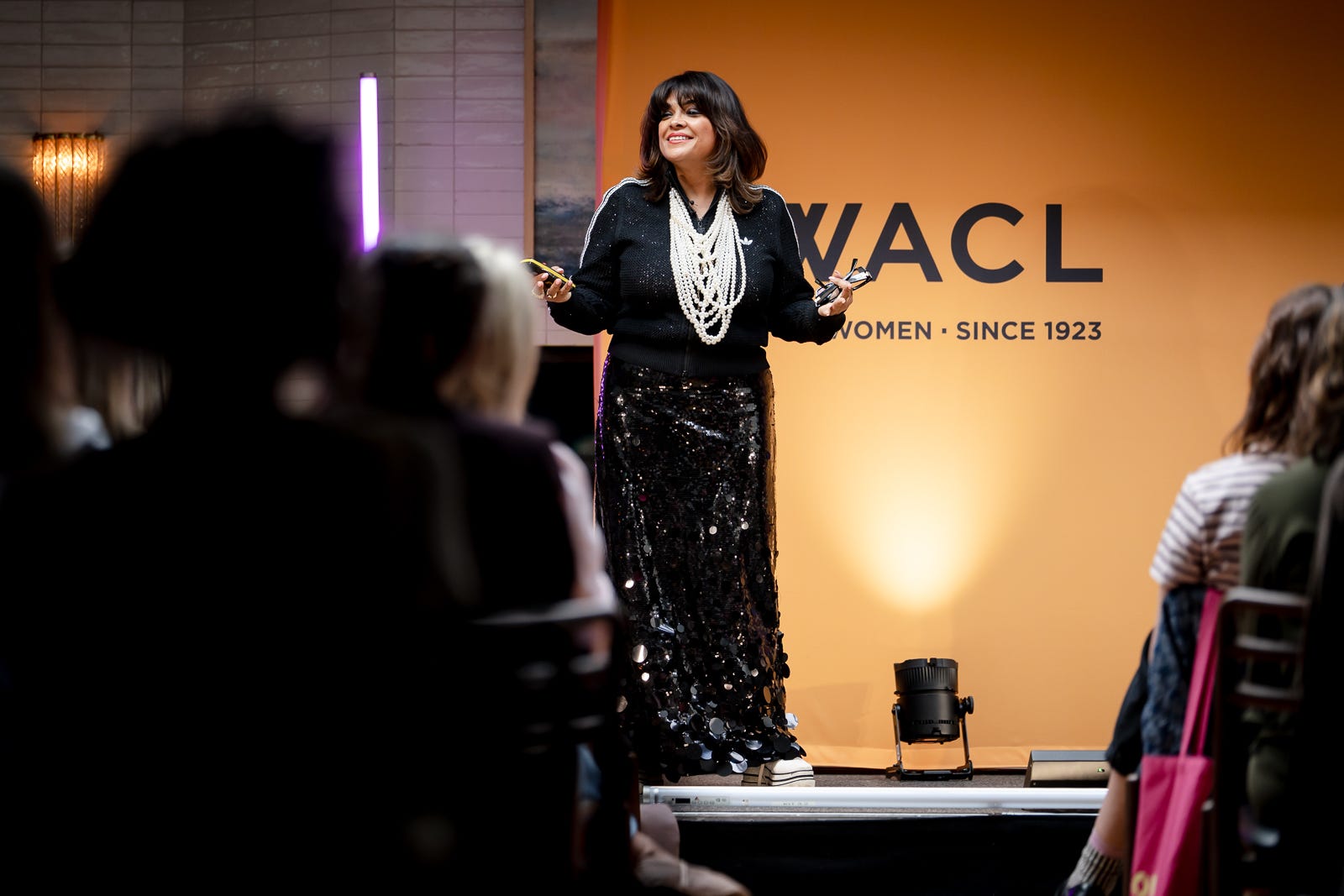
So I tested that idea in public. I gave a talk at WACL’s Festival of Talent in Scotland, (thank you Jules for having me), and watched a room of 200 women go from politely disinterested, or quietly certain they were “fine with AI”, to excited, curious and hungry for more. That room told me everything.
Then I built the 30 Day AI Challenge. Think couch to 5k, but for AI. One small prompt a day, designed to take you from anxious to confident and curious, with one rule that never bent: you stay the author. AI is the colleague, the editor, the thinking partner that pushes back. Never the voice that replaces yours.
Truthfully, I was testing myself more than anything. A hundred and twenty people signed up. Then, with no promotion at all beyond a plea to share it with someone who needed it, the list grew past 800.
And the comments started arriving.
“Terrified and fun in equal measure. Made my first app. Have to start somewhere.” “This has been the kick up the backside I’ve been needing.”
“Already using Claude far more effectively and experimenting and learning every day.”
That last one is the whole point. Not one clever output. A habit. Experimenting and learning every day. The prompts I taught will date within the year, half of them probably already have. The curiosity does not date. That is the real success: building the habit of looking at a hard, stuck, boring task and thinking, could AI help me with this, and actually meaning it.
I was blown away. So I did the thing the challenge had quietly been training me for. I looked honestly at my whole portfolio of work, and I doubled down on Switched ON. A media business at the heart of a movement and a platform, helping people get switched on, to AI first and to whatever comes next, closing an AI skills gap that is widening by the month, and releasing the creativity and innovation that gets trapped behind fear.
So was born Switched ON.

And here is what I am actually here to do with it.
To translate it. To take the jargon, the hype and the daily wave of launches and turn it into something you can use on a Tuesday.
To question it. Not to clap along with every announcement, but to ask the harder things. Is it any good. Who is it really for. Who does it quietly leave out.
To make the content that helps you work out what you genuinely need to know, and, just as importantly, what you can happily ignore. Because most of the overwhelm is just noise you were never meant to carry.
To be a practitioner, not a pundit. To show you how I actually use this. Hands on the keyboard, the wins and the cock-ups, in public.
To be a protagonist, not a spectator. In the room, on the stage, in the story. Not watching it happen to me, and not letting it happen to you either.
To challenge it. All of it. The tools, the people building them, and the whole landscape they are building it for. Because someone has to ask the hard questions on behalf of the people it keeps overlooking.
That is the job. All of it in service of one idea:
helping people make sense of what’s changing, so they can thrive in what’s next.
The mission is gaining momentum.
Which brings me to the thing people asked for next. Not more prompts. A room.
Switched ON Sessions
Because here is what thirty days of watching women teach themselves showed me: doing it alone works, but it is the slow road. A room is the fast track. Two hours working with AI side by side, with someone to lean over your shoulder at the exact moment you get stuck, compresses weeks of solo trial and error into a single evening. The challenge was couch to 5k. This is the training day with the coach running next to you.
So here it is.
The first Switched ON Session, 15 July in London, in partnership with Gamma.
In the workshop we will build beautiful presentations that actually land and design scroll-stopping carousels like the ones you have watched me make, working with AI the whole way through, and you will leave with them done, not on a to-do list.
Then we go to dinner. Do not mistake the dinner for the wind-down, it is where even more of the learning happens. The best tips, the honest questions, the “show me that again” moments never come from the stage. They come out around the table, between courses, from the woman sitting next to you. I have watched it happen at every dinner I have ever hosted, and it is the part people talk about for weeks.
Seats are deliberately few, because the whole point is a room where everyone gets seen.
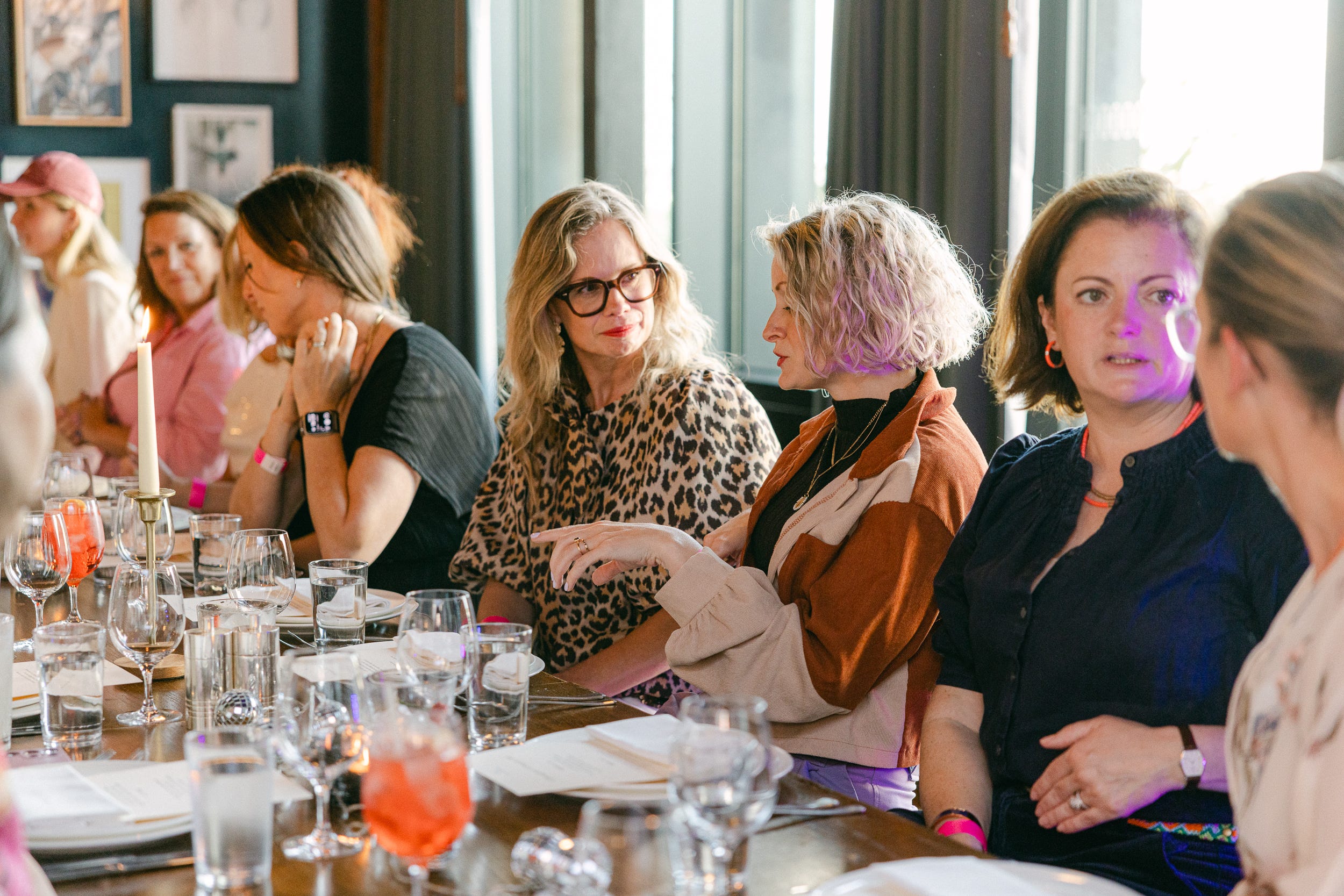
Book your seat: lu.ma/switched-on1
If you have been waiting for a sign to start, this is it.
Come and pull up a chair.
Nish x